The digital marketing playbook has been rewritten. If 2024 was the year marketers experimented with generative AI, and 2025 was the year they operationalized it, then 2026 is the year AI stopped being a tool and became the infrastructure itself. Nearly 87% of marketers now use generative AI in at least one recurring workflow, up from 51% just two years ago. The question is no longer whether to adopt these technologies, but how well you adapt to a landscape where search, social, advertising, and even the customer themselves are changing shape.
For businesses of every size, the stakes are simple: the strategies that won you customers in 2020 will quietly fail you in 2026. Here’s what’s actually changing — and what you need to do about it.
The Search Revolution: From SEO to GEO
The most profound shift in 2026 will be in how people discover information. Conversational AI is displacing websites and traditional search as the primary way people learn about products. Instead of scrolling through ten blue links, consumers now ask an AI assistant directly — and get a synthesised answer. This is the transition from search engine optimisation (SEO) to generative engine optimisation (GEO).
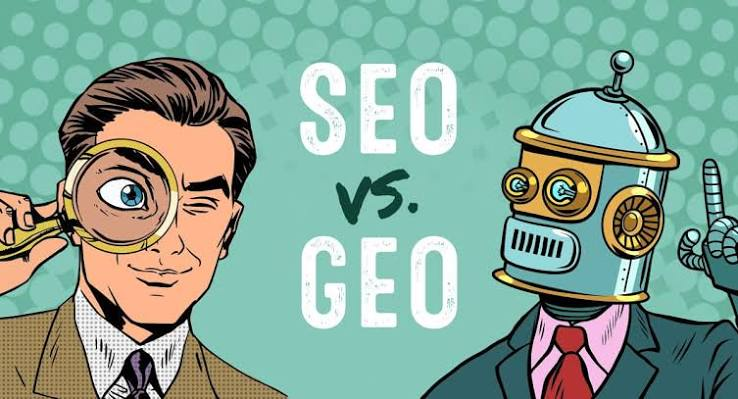
The practical consequence is brutal for businesses that haven’t adapted: organic traffic is declining, and in some verticals, search volume has dropped by more than half even as the remaining traffic carries higher intent. When answers are generated rather than clicked, your brand only wins if AI systems can find, understand, and trust your information.
The fix is to make your content “AI-ready.” That means publishing well-structured, authoritative, and clearly attributed information that an AI can easily synthesize — not just keyword-stuffed pages designed for a crawler. Think in terms of clear headings, factual depth, and consistent answers across your site. If an AI assistant is going to cite you, it needs to be able to parse you.
AI as the Operating System of Marketing
AI has moved from experimental tooling to core infrastructure. By 2026, the most effective teams use AI to orchestrate entire campaigns end-to-end: audience discovery, creative testing, omnichannel deployment, real-time measurement, and continuous optimization. This is no longer about generating a blog draft or an ad headline in isolation. It’s about AI running the whole machine.
The numbers back this up. Marketers report that AI content drafting delivers roughly 3.2x ROI on average, with personalization engines close behind at 2.7x. The average marketer now recovers about 6.1 hours per week through automation — time that should be reinvested in strategy, creativity, and judgment. Meanwhile, 46% of marketers now use AI to scale creative work, and a third run AI across creative, media, and measurement together.
The key insight for 2026 is that AI is becoming part of the strategy itself, not just the execution. The winning teams combine AI’s speed with human creativity and judgment at every stage of the funnel. And a new operating model is emerging: pod-based execution, where small, cross-functional, AI-native teams replace the old linear, department-siloed approach to campaign delivery.
Personalization at Scale — Without Creeping
Consumers in 2026 expect experiences that feel individually crafted. Generic, one-size-fits-all messaging increasingly reads as noise, and brands that can’t personalize lose attention fast. AI makes true one-to-one personalization possible at a scale that was previously impossible — tailoring content, offers, and recommendations to each individual in real time.
But there’s a critical tension. Personalization depends on data, and data is getting harder to collect. With third-party cookies dying and stricter privacy regulations tightening, the businesses that win are those that treat privacy and first-party data ownership as a competitive advantage rather than a compliance burden. The smartest brands are leaning into zero-party data — information customers actively and willingly share — and building trust through transparent, ethical AI use.
The rule of thumb: personalize relentlessly, but never at the cost of trust. In 2026, a brand’s AI reputation is a decisive factor in customer choice. Consumers reward companies that are transparent about how they use data and AI, and punish those that aren’t.
Video, Commerce, and the Creator Economy
Short-form vertical video has cemented its place as the dominant content format, and it’s no longer just for engagement — it’s for selling. Video has turned fully into commerce, with shoppable content and in-feed purchasing becoming standard across major platforms. If your business isn’t thinking about how a customer can buy directly from a video, you’re leaving revenue on the table.
At the same time, the creator economy has matured. Influencer marketing has evolved past the mega-celebrity endorsement into something more credible and more measurable: micro-influencers and niche creators who command smaller but far more engaged, trusted audiences. And the relationship has flipped from transactional to collaborative. Leading brands now co-create with their communities and creators, treating them as partners in product development and storytelling rather than just distribution channels.
Retail Media and the New Advertising Landscape
Advertising in 2026 is being reshaped by two forces: AI and retail media. Retail media networks — where brands advertise inside the ecosystems of retailers and marketplaces — have moved from niche to mainstream, giving businesses access to rich first-party purchase data and high-intent audiences. For many businesses, this is becoming a more efficient channel than traditional display advertising.
Meanwhile, paid media is increasingly determined by the quality of your AI inputs. As platforms’ algorithms decide what to show and to whom, the brands that feed them clean, well-structured data and clear objectives get better performance for the same spend. The flip side is sobering: most marketers still believe up to 30% of their budgets are wasted. In 2026, the cure for that waste is measurement that actually reflects the new reality — even as traditional attribution models crumble in the face of AI-driven, multi-touch journeys.
The Human Edge Still Wins
Here’s the paradox of an AI-dominated year: the deciding factor in 2026 is human. With automation handling the repetitive work, the differentiator is talent, judgment, and culture. The teams that win are those that combine AI-native technical skills with strong strategic and creative leadership. Machines can generate content, but they can’t generate taste, empathy, or a point of view.
So the practical advice for every business is to invest in people as much as in technology. Train your team to work with AI as a partner, not a replacement. Model outcomes before campaigns launch, shifting strategy upstream so you’re making smarter bets rather than reacting to results after the fact. And remember that while AI can scale your content, it can’t replace the authentic voice that makes customers trust you.
Your 2026 Action Plan
If you take one thing from this, let it be that 2026 rewards businesses that move from “using AI occasionally” to “running on AI as infrastructure.” Here’s a practical checklist:
- Make your content AI-ready. Structure it so search engines and AI assistants can understand, trust, and cite it. This is your new SEO.
- Treat first-party data as your most valuable asset. Build trust with transparent, ethical data practices, and lean into zero-party data.
- Personalize at scale, but never at the cost of trust. Use AI to tailor experiences while protecting the customer relationship.
- Sell from video. Make your short-form content shoppable and embrace retail media for high-intent reach.
- Partner with creators and communities. Co-create with micro-influencers who have real, earned trust with their audiences.
- Invest in your people. The human edge — judgment, taste, and culture — is what ultimately decides who wins.
Digital marketing in 2026 isn’t about chasing every new technology. It’s about building a business that’s structured, trusted, and easy for both humans and machines to understand. Do that, and you won’t just survive the AI shift — you’ll lead it.